
Why a real testimonial can still raise questions
The business in this case was a marketing agency selling its services. Its website included testimonials describing leads, appointments, revenue, and return on investment. Those are the kinds of results prospective clients want to see, so it’s easy to understand why the agency featured them prominently.
The problem was how those results could read to someone considering the service. A customer’s experience can be real without representing what another customer should expect. In my review, the prominent dollar amounts and performance figures were the first things I wanted to examine. That was my assessment of this account, rather than confirmation that any particular number automatically triggers a disapproval.
Google’s unreliable claims policy covers inaccurate claims and unlikely outcomes presented as expected results. That distinction matters when your strongest testimonials describe unusually good outcomes. The question goes beyond whether a customer actually said it: what expectation does the page create for the next person?
We added context where visitors would see it
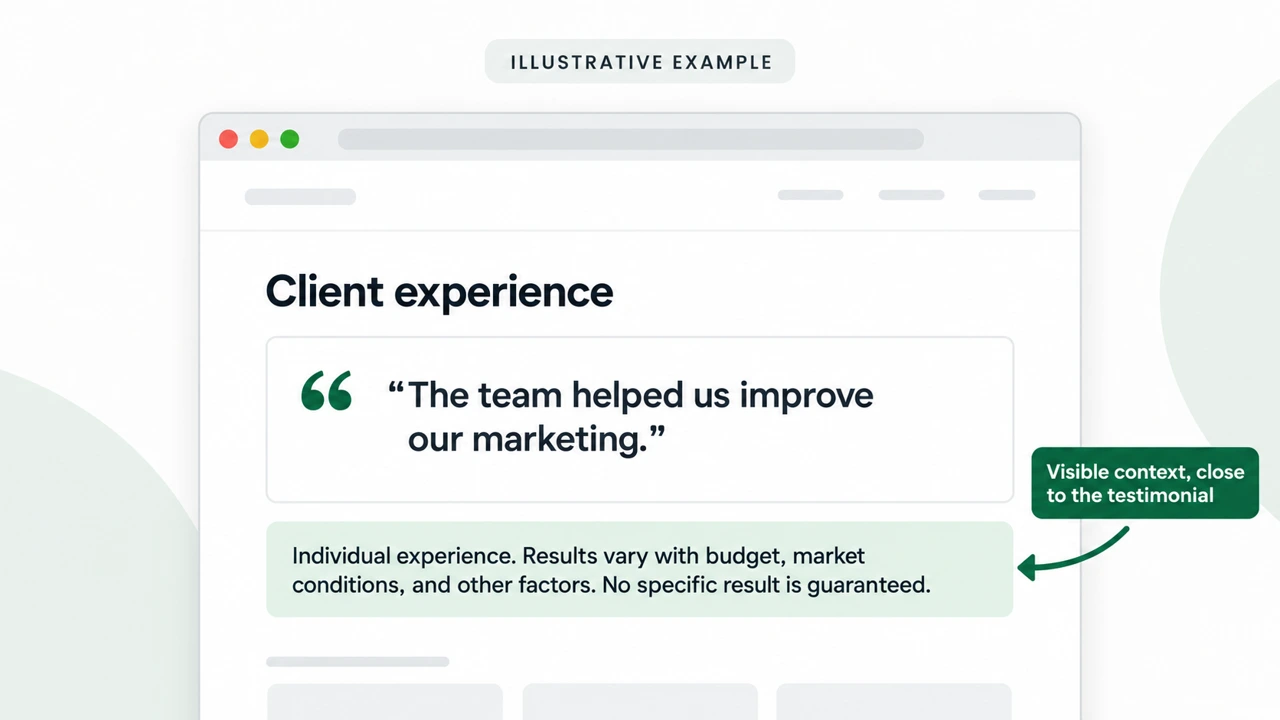
I had already gone back and forth with Google Support and tried appealing the decision. In this case, that wasn’t getting us past the disapproval, so we made changes to the destination page. One of those changes was adding visible results disclaimers directly below the testimonials, with another disclaimer near the testimonials farther down the page.
The wording explained that the testimonials reflected individual client experiences and that results varied with factors such as advertising budget and market conditions. Placement and readability were part of the change. A visitor should be able to notice that context while reading the testimonial, rather than having to hunt through tiny text somewhere else on the site.
A disclaimer still needs to match the claim it qualifies. Adding “results vary” underneath a promise does not make every promise appropriate. Look at the testimonial, surrounding headline, and offer together, and make sure the overall message gives people a realistic idea of the service.
The ad copy needed a second look, too
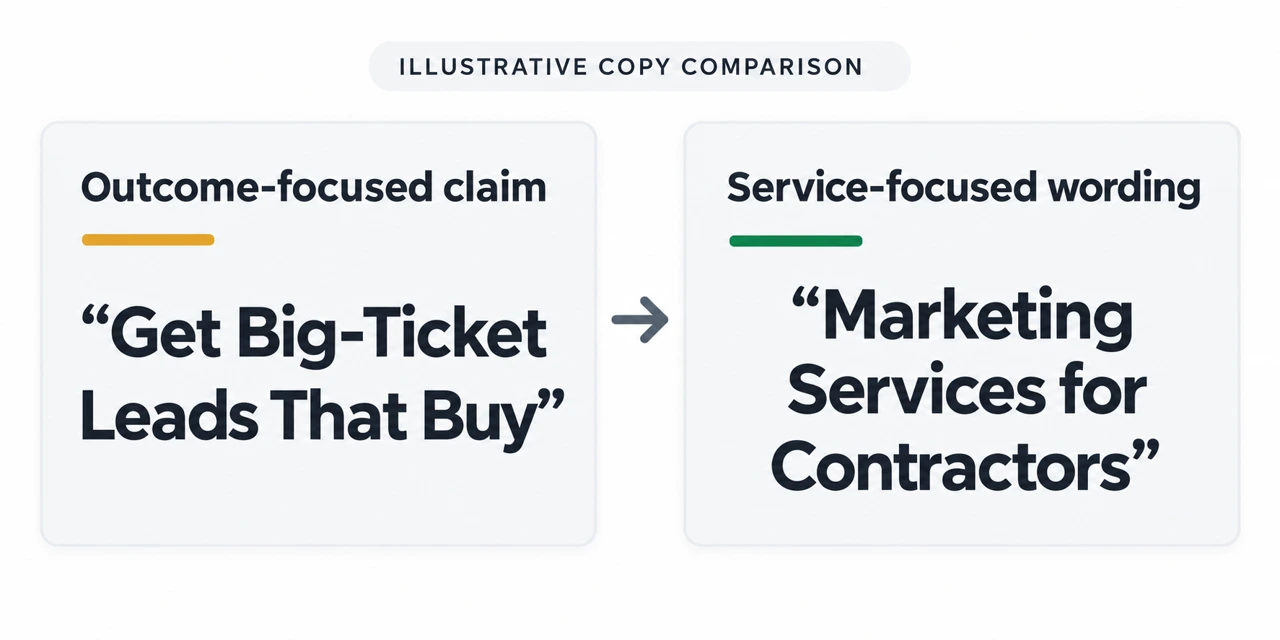
The website was only part of the picture. The ads also used language about better leads, better jobs, and big-ticket leads that buy. Some of that wording was less explicit than the claims on the page, but I toned it down and modified the ads so the offer relied less on an implied outcome.
For your own business, this is a useful point to step back and describe what you actually provide. Explain the service and who it helps, then check whether your headlines or descriptions go further and suggest a sales result you can’t reliably promise. Your ad and landing page should tell the same, realistic story.
What happened after the changes?
After revising the page and softening the ad language, I created new ads pointing to the updated destination. At the time I recorded the video above, about three or four days had passed and the revised ads were eligible.
Because we changed more than one thing, I can’t attribute that outcome to the disclaimer alone. The useful lesson from this account is to review the whole presentation: testimonial claims, nearby context, and the wording of the ads. Creating a new ad without addressing the underlying issue may not be enough for approval.
Where I would start with an unreliable claims disapproval
Start with the disapproved ad and the page it sends visitors to. Read the claims as someone who has never worked with your business. Pay particular attention to revenue figures, return-on-investment claims, guarantees, and testimonials that might make an exceptional result sound routine.
If you believe the decision is mistaken, an appeal may be appropriate. If the message needs work, make those corrections first and use Google’s review options for the revised content. Each situation is different; this account’s outcome gives you places to investigate, rather than a guaranteed approval formula.
If you’d like help working through a policy issue or managing your campaigns, consider my Google Ads management. I can review the ads and website together and help identify the changes worth making.